
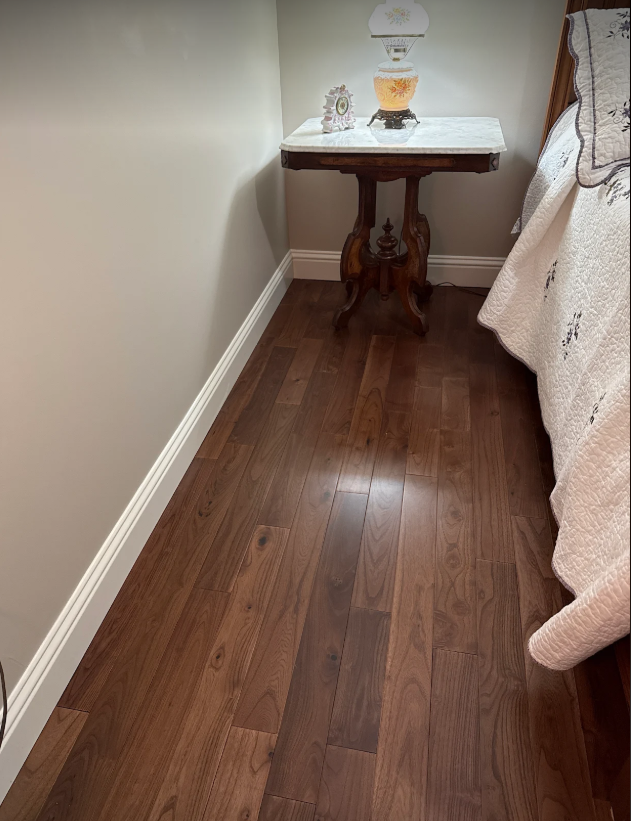
Short answer: to fix squeaky floors, first find out where the noise comes from. If boards rub against each other, a dry lubricant like talcum powder or powdered graphite can quiet them. If the floor has come loose from the subfloor or joists, fasten it back down: from below with shims or screws if you can get underneath, or from above with trim-head screws driven into a joist. Hide the screw heads with matching filler, and call a professional if the squeak covers a large area or the floor feels bouncy or sagging.
Why floors squeak
Most floor squeaks come from movement. Floorboards, the subfloor and the joists under them are fastened together, and when those parts shift against each other the result is a squeak or creak. Typical causes include:
- Loose fasteners. Nails can work loose over time, letting the subfloor rub against the joists.1
- Gaps between the subfloor and a joist, so the floor flexes when you step on it.1
- Boards rubbing against neighboring boards.
- Seasonal wood movement. Wood shrinks and swells as humidity changes, which can loosen a floor in dry winter air. That is our own observation from St. Louis homes, and it is not something the repair guides we checked cover directly. If your squeaks come and go with the seasons, see our guide to gaps in hardwood floors in winter.
Step 1: Find the squeak
- Walk the floor slowly and mark each squeaky spot with painter's tape. Have a helper listen from below if you can.
- Check whether the squeak is in the boards or underneath. A squeak that follows a single board is often board-on-board rubbing. A squeak that moves with your weight over a wider area usually means the floor has loosened from the subfloor.
- Locate the joists. A stud finder can help you find the joist under the squeak so you know where to fasten.2
How to fix squeaky floors from below
If you have a basement or crawl space, fixing the floor from underneath is usually the cleanest repair because it does not mark the floor surface.
- Shims. If there is a gap between the subfloor and a joist, a thin wood shim coated with wood glue can be tapped gently into the gap. Do not force it, or you can lift the floor.1
- Screws. Driving a screw up through the joist or a block into the subfloor pulls the two tight. Use a length that will not poke through the top of your finished floor.
- Blocking. If the subfloor is sagging or not well supported, a block fastened between joists can add support.
How to fix squeaky floors from above
When you cannot get underneath, you can fasten the floor down from the top. The idea is to pull the finished floor and subfloor tight against a joist.
Hardwood floors
- Try a dry lubricant first. Sprinkle talcum powder or powdered graphite along the seam between the squeaky board and its neighbor and work it in with a soft brush. This helps when boards rub against each other, but it will not fix a loose subfloor. Wipe up any extra powder so the floor is not slippery.
- Drive a trim-head screw into the joist. Predrill a small pilot hole through the board at the squeak, then drive the screw down through the floor into the subfloor and joist, leaving the head just below the surface.2
- Hide the hole. Fill it with wood filler or a wax crayon that matches your floor color.2
Hardwood strip flooring is normally nailed to the subfloor, so a screw only works well when it lands in solid wood. Test your technique on a hidden spot first.
Carpeted floors
Squeaks under carpet come from the subfloor, not the carpet. One approach is to drive a long screw through the carpet and pad into the subfloor and joist at the squeaky spot, and another is to use a screw kit made to snap off below the carpet surface.3 If your carpet is worn or the pad underneath is flattened, replacement may be the better fix, and you can see how we handle it on our carpet installation page.
Laminate, vinyl plank and other floating floors
Floating floors are not fastened to the subfloor, so do not screw or nail through them unless the manufacturer says it is safe, since that can damage the planks and the way the floor moves. Squeaks in floating floors often come from the joints rubbing, an uneven subfloor or missing underlayment, and are best looked at by an installer.
Which squeaky floor fix should you use?
| Situation | Best fix |
|---|---|
| One board rubbing against its neighbor | Talcum powder or powdered graphite in the seam |
| Gap between the subfloor and a joist, with access below | Glued shim, or a screw up into the subfloor |
| No access below, hardwood floor | Trim-head screw into the joist, then filler |
| Carpeted floor | Screw through the carpet into the joist |
| Squeaks across a whole room, or a bouncy floor | Professional inspection |
| Floating laminate or vinyl plank | Installer inspection; do not screw through the floor |
How to prevent squeaky floors
- Keep indoor humidity steady. Hardwood stays happiest at moderate, stable humidity. A hygrometer will show you where you stand.
- Have floors installed properly. A flat, dry, well-fastened subfloor is the best protection against future squeaks. See our flooring installation service.
- Fix small squeaks early. A loose board that keeps moving can wear into a bigger problem.
- Do not walk on the floor in heavy boots or heels. Concentrated pressure can loosen boards.
- Protect the finish. After a repair, our guide to wood floor scratch repair helps with any marks left behind.
When to call a professional
Call a flooring professional if:
- The squeak covers a large area or keeps coming back after you fasten it.
- The floor feels soft, bouncy or sagging, which can point to a structural problem.
- You see cupped, buckled or lifting boards, or signs of moisture.
- You are not sure how deep your finished floor and subfloor are, and do not want to risk a screw going through.
- The floor is engineered or floating and you are not sure it can be fastened.
Our team can find the cause and recommend whether it needs a simple repair, re-fastening or a refinish. See our hardwood flooring and hardwood refinishing services.
Frequently asked questions
How do you fix squeaky floors?
Find the squeak, then fasten the loose part. Use talcum powder or powdered graphite for boards rubbing together, shims or screws from below for gaps under the floor, and trim-head screws into the joist from above when you cannot get underneath.
How do you fix a squeaky floor without removing the carpet?
Locate the joist under the squeak and drive a long screw through the carpet and pad into the subfloor and joist, or use a screw kit made for fixing squeaks through carpet.
Does baby powder fix squeaky floors?
Sometimes. Talcum powder reduces friction between boards that rub together, but it will not fix a floor that has come loose from the subfloor. The fix may be temporary.
Why do my hardwood floors squeak in winter?
Dry indoor air makes wood shrink slightly, which can loosen fasteners and let boards move. Keeping humidity steady helps, and persistent squeaks may need re-fastening.
Can I fix squeaky engineered hardwood or laminate floors?
It depends on how they were installed. Floating floors should not be screwed through, so check the manufacturer's instructions or ask an installer.
Are squeaky floors a sign of a bigger problem?
Usually not. Most squeaks are loose fasteners or normal wood movement. A sagging, bouncy or wet floor is different and should be checked by a professional.
Need help with squeaky floors?
Request a free estimate or call Kelly's Flooring at (636) 677-5555. We are a family-owned flooring store at 2311 Little Antire Rd in High Ridge, Missouri, serving the St. Louis area since 1978, and we can tell you honestly whether your floor needs a quick fix or a bigger repair.
Sources and method
- Hunker, "How to Stop Hardwood Floors Squeaking and Creaking Noises," on causes (loose fasteners, gaps) and shimming from below. hunker.com
- This Old House, "How to Fix Squeaky Floors," on locating joists and fastening from above and below. thisoldhouse.com
- Bob Vila, "How to Fix a Squeaky Floor," on fixing squeaks through carpet. bobvila.com
- These are consumer how-to guides, not a building-code or manufacturer standard. We did not find a source on humidity control as a squeak fix, so the winter and humidity comments reflect Kelly's Flooring's experience. Always follow your flooring manufacturer's instructions, and have a professional inspect floors that sag, bounce or show moisture damage.
Ready to Get Started?
Contact Kelly's Flooring for a no-obligation estimate on your flooring project.