
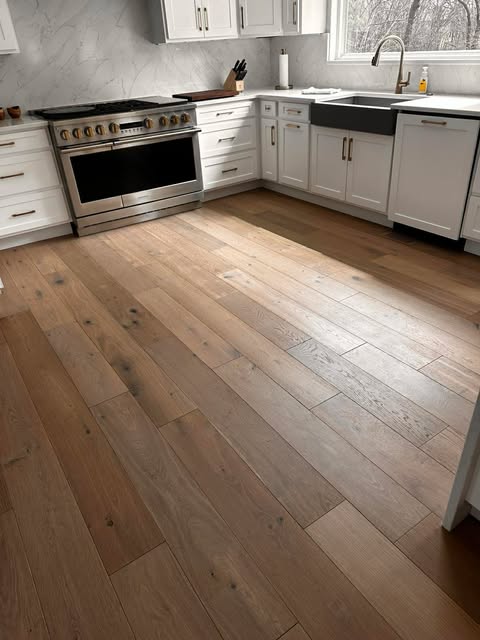
Short answer: the right wood floor scratch repair depends on how deep the scratches are. Light surface scratches that sit only in the finish can often be hidden with a touch-up marker, a wax stick or a recoat. Scratches that catch your fingernail usually need wood filler or a repair kit. Deep gouges, widespread scratching and worn finish are a job for a screen-and-recoat or a full refinish by a professional.
First, find out how deep the scratch is
Before you buy anything, look at the scratch in good light and run a fingernail across it. That tells you which repair to try:
| What you see and feel | What it usually means | Best fix |
|---|---|---|
| Whitish or hazy line, smooth to the touch | Scratch is in the finish only | Clean, then touch-up marker, wax or a polish; recoat if widespread |
| Fingernail catches slightly | Scratch has reached the wood | Wax filler stick or wood filler matched to the floor color |
| Deep groove, gouge or missing wood | Wood is damaged | Filler for small areas; board repair or replacement for larger ones |
| Many scratches, dull traffic lanes | Finish is worn | Screen-and-recoat or full refinish |
Also check what your floor is. Solid hardwood, engineered hardwood and floors with wax, oil or polyurethane finishes can all be repaired differently, and engineered floors have a thin top layer of real wood that limits how much sanding they can take. When in doubt, check the manufacturer's care guide before you try anything.
How to remove light scratches from hardwood floors
- Clean the area. Sweep or vacuum, then wipe with a barely damp cloth and a hardwood-safe cleaner so grit does not get ground in.
- Test in a hidden spot. Try any product in a closet or under furniture first to check the color and sheen.
- Use a touch-up marker or wax stick. Pick the shade that matches your floor and fill the scratch following the product directions.1
- Wipe off the excess. Work along the grain with a clean, soft cloth.
- Buff to match the sheen. Gently buff the repair so the shine matches the surrounding floor.
- Let it settle before traffic. Follow the product's dry time before walking on the spot.
If many light scratches are spread over a larger area, a hardwood floor polish or restorer made for your finish type can even out the look. Follow the manufacturer's directions and do not use oil-based or wax products on a floor with a finish that does not call for them.
How to fix deeper scratches and gouges
- Clean the scratch and remove loose splinters with a soft brush or the edge of a plastic card.
- Fill it. Press a color-matched wax filler stick or wood filler into the scratch, slightly overfilling it.1 For gouges, many repair kits use two shades of wax to blend the color.
- Level the surface. Scrape the excess flush with a plastic putty knife or card so you do not scratch the surrounding finish.
- Add color if needed. A stain marker can blend the grain and tone into the surrounding wood.
- Seal the repair. Where your floor has a surface finish, a compatible touch-up finish over the filled spot helps the patch blend and last.
Fillers do not make a deep gouge disappear, but done carefully they make it far less noticeable from standing height. If the scratch runs across several boards or the wood is split, replacing the damaged board is usually the better answer.
What about vinegar, olive oil and other home remedies?
You will find advice online to rub scratches with olive oil, vinegar, walnuts or coffee grounds. Treat these with caution. Several repair guides describe them as only masking a scratch for a while rather than repairing it, and some warn that acid or oil can dull or damage certain finishes.2 Sources do not all agree, which is a good reason to test on a hidden spot first, or skip them. A color-matched wax, marker or filler is a safer bet because it is made for the job.
When sanding or refinishing is the better choice
- Scratches cover large areas or run through the main traffic paths.
- The finish is dull, worn or peeling, so touching up one spot will look patchy.
- Gouges go through the finish into bare wood in many places.
- You want a uniform look across a whole room.
A screen-and-recoat lightly abrades the finish and adds a fresh coat, which can renew a floor whose scratches are only in the finish.3 A full refinish sands the floor back to bare wood and re-stains and re-seals it. Our guides explain whether you need a recoat or a full refinish and how to tell when your floors need refinishing. You can also see our hardwood refinishing service. Engineered floors can only be refinished a limited number of times, so ask before sanding.
How to prevent scratches on hardwood floors
- Put felt pads under every chair and table leg and replace them when they wear down.
- Lift furniture instead of dragging it, and use sliders or blankets when you must move heavy pieces.
- Use mats at doors to catch grit, sand and winter road salt.
- Keep pet nails trimmed and place rugs in high-traffic lanes.
- Sweep or vacuum often with a hard-floor setting so grit does not act like sandpaper.
- Avoid high heels and cleats on bare wood.
- Keep indoor humidity steady, since very dry air can stress the finish and the wood. See gaps in hardwood floors in winter.
More routines are in our guide to everyday habits that keep your floors beautiful.
Frequently asked questions
What is the best wood floor scratch repair?
Match the method to the depth. Clean the area, then use a touch-up marker, wax stick or polish for light scratches, and a color-matched filler for deeper ones. Buff to match the sheen, and call a pro for widespread damage.
Can you remove scratches from hardwood floors without sanding?
Yes, in many cases. Surface scratches and minor nicks can often be hidden with markers, wax, filler or a screen-and-recoat. Sanding is for widespread damage or when the finish has worn through.
Does vinegar and olive oil remove scratches from hardwood floors?
Guides generally say it only hides them temporarily, and some warn it can harm finishes. We would not rely on it. Use a product made for wood floors instead.
How do you remove scratches from engineered hardwood floors?
Light scratches can use the same markers, wax and fillers. Be careful with sanding, because engineered floors have a thin wood layer. Check the manufacturer's care guide or ask a professional before refinishing.
How do you remove dog scratches from hardwood floors?
Treat them by depth, as above. To reduce new scratches, keep nails trimmed and use rugs where your dog runs and turns.
Can a deep scratch in a hardwood floor be fixed?
Often it can be filled so it is much less visible. Very deep gouges or damaged boards may need board repair or replacement.
When should I call a professional?
Call a pro if scratches are widespread, the finish is worn, boards are gouged or split, or you are unsure whether your floor can be sanded.
Need help with scratched hardwood floors?
If your floors need more than a touch-up, request a free estimate or call Kelly's Flooring at (636) 677-5555. We are a family-owned flooring store at 2311 Little Antire Rd in High Ridge, Missouri, serving the St. Louis area since 1978, and we can tell you honestly whether your floor needs a repair, a recoat or a full refinish. You can also see our hardwood flooring options.
Sources and method
- General scratch-repair guidance (wax filler sticks, touch-up markers and buffing) from homeowner repair guides such as Angi, "Remove scratch marks and bring your hardwood back to life." These are consumer articles, not a standard; product directions and manufacturer care guides take priority. angi.com
- Home-remedy cautions (vinegar and oil may only mask scratches or affect finishes) compiled from several flooring care guides that do not fully agree, which is why this post recommends testing first. Example: Flooring Clarity, "Scratches on Hardwood Floors With Vinegar." flooringclarity.com
- Description of screen-and-recoat as light abrasion of the finish plus a fresh coat, for scratches that stay in the finish, from contractor guidance such as Today's Homeowner, "How do I go about repairing a scratch in my hardwood floor?" todayshomeowner.com
- Method choices reflect Kelly's Flooring's experience with hardwood floors in the St. Louis area and are general guidance. Always follow your floor manufacturer's care instructions and warranty terms, and test any product in a hidden spot first.
Ready to Get Started?
Contact Kelly's Flooring for a no-obligation estimate on your flooring project.